


Chinese Astrology Explained: The 12 Zodiac Animals, Five Elements, and the Meaning Behind Your Sign
What does a clever Rat have in common with a mighty Dragon? Why does the gentle Rabbit follow the fearless Tiger? And how can two people born in the same animal year have remarkably different personalities?
- Chinese Astrology Explained: The 12 Zodiac Animals, Five Elements, and the Meaning Behind Your Sign
- What Is Chinese Astrology, and How Does It Work?
- The Origins of the Chinese Zodiac: History Meets Mythology
- Meet the 12 Chinese Zodiac Animals
- How to Find Your Chinese Zodiac Sign
- The Five Elements: Why Not All Dragons Are Alike
- Yin and Yang: The Importance of Balance
- The 60-Year Cycle: Where Animals and Elements Come Together
- Beyond Your Birth Year: The Four Pillars of Destiny
- Chinese Zodiac Compatibility: Can Two Animals Make a Good Match?
- Chinese Astrology and the Art of Choosing the Right Moment
- Your Zodiac Year: Is It Always a Lucky Year?
- Chinese Astrology vs. Western Astrology: What’s the Difference?
- Common Questions About Chinese Astrology
- What Can Chinese Astrology Actually Teach Us?
- Sources and Further Reading
The answers begin with the Chinese zodiac, one of the world’s most recognizable astrological traditions. Its twelve animals have represented the passage of time for centuries, becoming powerful cultural symbols associated with personality, relationships, good fortune, and the changing rhythms of life.
But Chinese astrology is far more interesting than simply finding the animal associated with your birth year.
Behind the familiar signs lies an elaborate system of calendars, the Five Elements, Yin and Yang, and repeating cycles of time. These traditions offer a symbolic language for understanding human nature, examining relationships, and reflecting on the different stages of life.
Whether you’re a curious Dragon, a practical Ox, or someone who has never checked their Chinese zodiac sign, there’s an entire world of meaning waiting beyond the animal itself.
What Is Chinese Astrology, and How Does It Work?
Chinese astrology is a collection of traditional systems used to interpret time, personality, relationships, and fortune through recurring patterns in the Chinese calendar.
Its most familiar feature is the Chinese zodiac, or Shēngxiào (生肖), a repeating cycle of twelve animals. Each animal corresponds to one year in a twelve-year sequence.
Unlike the twelve signs of Western astrology, which are associated with divisions of the zodiac along the Sun’s apparent annual path, the popular Chinese zodiac assigns its animal signs primarily according to the year of birth.
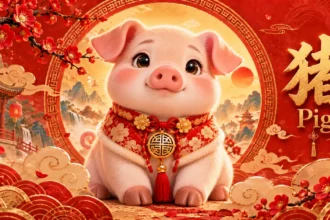
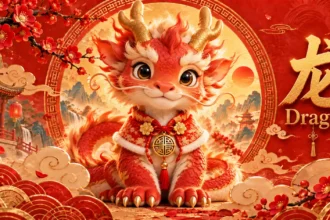
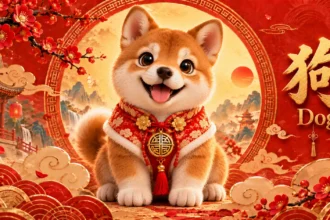
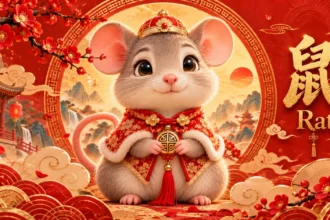
Someone born in a Rat year, for example, traditionally shares certain symbolic qualities with the Rat: intelligence, adaptability, resourcefulness, and alertness.
However, a person’s birth-year animal is only one component of Chinese astrology.
More elaborate systems also consider the Five Elements, Yin and Yang, and the calendar relationships associated with the month, day, and hour of birth.
An important distinction is that Chinese astrology is not simply a Western natal chart translated into Chinese symbols. Its established traditions use different calendrical calculations and interpretive principles.
The Chinese zodiac is best understood as a cultural and symbolic system. Its personality descriptions and predictions are traditional interpretations, not scientifically demonstrated facts about human behavior or destiny.
The Origins of the Chinese Zodiac: History Meets Mythology
The Chinese zodiac has a history stretching back more than two thousand years.
Animal associations with the Chinese calendar were already appearing during the final centuries BCE. By the Eastern Han dynasty, the familiar order of the twelve animals had become established.
Over time, the zodiac became deeply woven into Chinese society. Its animals appeared in sculpture, ceramics, paintings, decorative objects, and burial figures, while the calendrical system continued to influence traditional ways of measuring and interpreting time.
Yet most people encounter the zodiac through a much more colorful introduction: the legendary Great Race.
The Great Race: How the Animals Earned Their Places
According to a popular Chinese folktale, the Jade Emperor decided to organize a competition to determine the order of the zodiac animals.
The animals had to cross a river, and their finishing positions would establish their places in the twelve-year cycle.
The strong, dependable Ox was well suited to the challenge. But the clever Rat recognized an opportunity.
Rather than attempt the dangerous crossing alone, the Rat persuaded the Ox to carry it across the water.
Just as they approached the finish, the Rat leaped ahead, claiming first place. The surprised Ox finished second.
The powerful Tiger arrived third, followed by the agile Rabbit. The magnificent Dragon came fifth, despite its ability to fly. In many versions of the story, the Dragon had stopped to help others along the way.
The remaining animals completed the sequence: Snake, Horse, Goat, Monkey, Rooster, Dog, and finally Pig.
The story transforms the zodiac into a collection of memorable personalities. Intelligence can overcome physical strength. Courage does not always mean winning. Kindness, patience, and cooperation each have their own value.
There are many variations of the Great Race, and the legend should not be confused with the historical origins of the calendrical system. Nevertheless, it remains a delightful way to remember the zodiac’s order.
Meet the 12 Chinese Zodiac Animals
Each animal represents a recognizable collection of human qualities, combining admirable strengths with potential weaknesses.
These characteristics are best understood as traditional archetypes rather than fixed personality labels.
| Zodiac animal | Traditional strengths | Possible challenges |
|---|---|---|
| Rat (鼠) | Clever, adaptable, observant | Overthinking, cautiousness |
| Ox (牛) | Patient, reliable, determined | Stubbornness, resistance to change |
| Tiger (虎) | Brave, passionate, independent | Impulsiveness, impatience |
| Rabbit (兔) | Diplomatic, gentle, perceptive | Conflict avoidance, indecision |
| Dragon (龙) | Confident, ambitious, charismatic | Excessive pride, unrealistic expectations |
| Snake (蛇) | Thoughtful, intuitive, strategic | Secretiveness, suspicion |
| Horse (马) | Energetic, sociable, adventurous | Restlessness, inconsistency |
| Goat (羊) | Creative, compassionate, sensitive | Self-doubt, excessive worry |
| Monkey (猴) | Inventive, witty, versatile | Distraction, mischievousness |
| Rooster (鸡) | Organized, observant, hardworking | Perfectionism, criticism |
| Dog (狗) | Loyal, honest, protective | Anxiety, defensiveness |
| Pig (猪) | Generous, sincere, warmhearted | Overindulgence, excessive trust |
The Goat is also called the Sheep or Ram in English translations. All three names refer to the same zodiac position.
More Than Twelve Personality Types
Consider the Tiger and Rabbit.
A Tiger archetype approaches a difficult situation with courage and immediate action. A Rabbit archetype may prefer to observe carefully, understand the people involved, and find a peaceful solution.
Neither approach is inherently better.
The Tiger’s confidence can become recklessness, while the Rabbit’s sensitivity can become hesitation. Their strengths and weaknesses are closely connected.
This is one of the most useful ways to approach Chinese zodiac symbolism: every attractive quality has a potential excess, and every apparent weakness may conceal a valuable strength.
A person can also recognize qualities associated with several animals. Human personalities are too varied to fit neatly into twelve categories, and more detailed Chinese astrological systems acknowledge greater complexity.
How to Find Your Chinese Zodiac Sign
Finding your animal sounds simple: look up your birth year and match it to the appropriate zodiac sign.
But there’s an important complication.
The Chinese zodiac year does not automatically begin on January 1.
The traditional Chinese calendar is lunisolar, coordinating lunar months with the solar year. Chinese New Year usually falls between late January and mid-February.
This means that someone born during January or early February may belong to the previous year’s zodiac animal.
For example, in 2026, Chinese New Year falls on February 17.
Someone born on January 25, 2026, belongs to the preceding Snake year according to the Chinese New Year convention, while someone born on February 20 belongs to the Horse year.
The same Gregorian year can therefore contain people associated with two different zodiac animals.
What About the Beginning of Spring?
There is another distinction worth knowing.
Some Chinese astrological traditions, particularly methods of the Four Pillars of Destiny, use Lìchūn (立春), the Beginning of Spring solar term, as the boundary for the astrological year.
Lìchūn usually occurs around February 4, but it does not necessarily coincide with Chinese New Year.
As a result, two calculators using different traditional conventions may assign different year markers to someone born near the beginning of February.
For the familiar birth-year animal of the Chinese calendar, Chinese New Year is the usual reference. More specialized Four Pillars calculations may follow the Beginning of Spring convention instead.
A reliable calculator should make its convention clear rather than quietly assuming that every zodiac year begins on January 1.
The Five Elements: Why Not All Dragons Are Alike
Knowing your Chinese zodiac animal is only the beginning.
Chinese cosmology also incorporates the Five Elements, traditionally known as Wǔxíng (五行):
- Wood: Growth, creativity, flexibility, and development.
- Fire: Passion, activity, warmth, and transformation.
- Earth: Stability, nourishment, responsibility, and balance.
- Metal: Structure, discipline, determination, and refinement.
- Water: Adaptability, reflection, wisdom, and fluidity.
Although commonly translated as elements, these are better understood as dynamic phases or processes rather than five physical substances.
The Five Elements describe different ways that change, growth, and interaction can occur.
How the Elements Influence a Zodiac Animal
Within the traditional year cycle, an animal sign is paired with an element.
This creates distinctions between people who share the same animal but were born in different cycles.
For example, a Fire Horse is traditionally interpreted differently from a Water Horse. Both share the Horse’s symbolic energy, independence, and enthusiasm, but the accompanying element adds another dimension to the interpretation.
Fire may emphasize expressive, dynamic qualities, while Water introduces themes of reflection and flexibility.
These descriptions are symbolic, not a formula for predicting someone’s personality.
The Generating and Controlling Cycles
The Five Elements are also connected through two important patterns.
In the generating cycle, each element supports or gives rise to another:
Wood feeds Fire, Fire produces Earth through ash, Earth gives rise to Metal, Metal is traditionally associated with generating Water, and Water nourishes Wood.
The controlling cycle describes a different relationship:
Wood controls Earth, Earth contains Water, Water extinguishes Fire, Fire melts Metal, and Metal cuts Wood.
These relationships are not simply divisions between good and bad elements.
Instead, they express an important theme in Chinese cosmological thought: growth and restraint both contribute to balance.
Something that encourages us can be helpful, but so can something that challenges our habits or prevents us from going too far.
Yin and Yang: The Importance of Balance
Another fundamental concept in Chinese philosophy and astrology is the relationship between Yin (阴) and Yang (阳).
Yin and Yang are complementary principles used to describe interconnected patterns of change.
Yin is traditionally associated with qualities such as receptivity, stillness, inward movement, and cooling.
Yang is associated with activity, outward movement, warmth, and expression.
Neither is inherently superior to the other.
Think of the relationship between rest and activity. Constant action without recovery leads to exhaustion, while endless rest without movement prevents progress.
The two states support and define one another.
In traditional Chinese calendrical astrology, Yin and Yang also alternate through the sequence of Heavenly Stems, contributing to the structure of the larger astrological cycle.
This brings us to one of the most interesting features of the Chinese calendar.
The 60-Year Cycle: Where Animals and Elements Come Together
The twelve animal signs repeat every twelve years, but the full traditional year-name cycle takes sixty years to complete.
Why sixty?
The Chinese calendrical system combines two repeating sequences:
- The Ten Heavenly Stems, associated with the Five Elements in their Yin and Yang forms.
- The Twelve Earthly Branches, each associated with one of the zodiac animals.
These two sequences advance together, producing sixty distinct combinations before returning to their starting point.
This is known as the sexagenary cycle, or Gānzhī (干支).
It explains why knowing someone is a Dragon or a Rabbit does not reveal their complete traditional birth-year designation.
For example, 2024 was a Wood Dragon year, while 2012 was a Water Dragon year.
Both share the Dragon animal, but they occupy different positions within the sixty-year cycle.
This system also reveals an important distinction between the familiar zodiac and more elaborate Chinese astrological interpretations: time is understood through several interlocking cycles rather than a single animal label.
Beyond Your Birth Year: The Four Pillars of Destiny
Many people assume their Chinese zodiac animal represents their entire Chinese astrological identity.
In reality, one of the best-known traditional methods goes considerably further.
Bāzì (八字), often translated as the Eight Characters or Four Pillars of Destiny, interprets four components of a person’s birth:
- Year of birth: Traditionally associated with ancestry, family background, and broader social influences.
- Month of birth: Connected with seasonal conditions, development, and aspects of work and social life.
- Day of birth: A central part of the interpretation of personal identity and close relationships.
- Hour of birth: Adds themes traditionally connected with later life, aspirations, and personal expression.
Each pillar contains a Heavenly Stem and an Earthly Branch.
Together, the four pairs create the eight characters from which Bāzì takes its name.
Unlike a simple zodiac-year calculator, a full Four Pillars reading requires more detailed calendar calculations and an accurate birth time for the hour pillar.
A person born in a Dragon year can therefore have a very different Four Pillars configuration from another person born in that same year.
The familiar zodiac animal offers an approachable introduction. A Four Pillars chart provides a more elaborate traditional framework.
Chinese Zodiac Compatibility: Can Two Animals Make a Good Match?
The Chinese zodiac is frequently used to explore romantic compatibility, friendship, family dynamics, and working relationships.
Traditional interpretations associate different animal signs with characteristic ways of communicating, making decisions, expressing affection, and responding to difficulties.
For example, a Horse may symbolize independence and a desire for freedom, while an Ox may represent stability, consistency, and routine.
These qualities could complement one another.
The Horse might encourage spontaneity, while the Ox offers structure and patience.
But they could also create friction. The Horse may experience the Ox as inflexible, while the Ox may find the Horse unpredictable.
The interesting question is not simply whether these two animals are compatible.
It is how their symbolic strengths and weaknesses might interact.
Traditional Harmonies and Clashes
Chinese zodiac compatibility includes established patterns based on relationships among the twelve Earthly Branches.
One example is the system of three-way harmonies, traditionally grouping the animals into four sets:
| Harmony group | Zodiac animals |
|---|---|
| First group | Rat, Dragon, Monkey |
| Second group | Ox, Snake, Rooster |
| Third group | Tiger, Horse, Dog |
| Fourth group | Rabbit, Goat, Pig |
In traditional interpretations, animals within the same group are often considered to share compatible tendencies.
Other relationships, including the six opposing branch pairs, are associated with potential tension or contrasting energies.
However, these classifications describe symbolic relationships within the zodiac system. They cannot determine whether two actual people will fall in love, communicate successfully, or build a lasting relationship.
Love, Friendship, and Work Compatibility
Compatibility also depends on the kind of relationship being examined.
Romantic compatibility may emphasize emotional expression, affection, trust, independence, and long-term expectations.
Friendship compatibility can focus on communication, mutual interests, loyalty, and the balance between adventure and stability.
Work compatibility may examine decision-making styles, organization, leadership, creativity, and the ability to collaborate under pressure.
A pair whose traditional zodiac traits suggest tension in romance might still make an effective professional partnership.
Similarly, two signs considered naturally harmonious might struggle if the people involved have different values or expectations.
A Chinese zodiac compatibility score is therefore best treated as a playful summary of traditional symbolism, not an objective measurement of relationship success.
Its real value lies in the questions it encourages: Where are two people similar? Where might they misunderstand one another? What could each person learn from the other?
Chinese Astrology and the Art of Choosing the Right Moment
Chinese astrology is not limited to interpreting birth dates.
Traditional Chinese almanacs have also been used to identify auspicious and inauspicious dates for important activities.
Historically, people have consulted such calendars when considering events such as weddings, moving into a new home, beginning construction, traveling, or opening a business.
These practices draw on calendrical relationships, including the Heavenly Stems, Earthly Branches, and other traditional calculations.
This approach reflects a broader cultural interest in timing and harmony.
The idea is that different moments possess different symbolic qualities, and that certain activities may be better aligned with particular dates.
Of course, there is no reliable scientific evidence that choosing an auspicious date guarantees a successful marriage or business venture.
Yet the tradition reveals something meaningful about how calendars can shape human experience.
Choosing a date is not always merely practical. It can be ceremonial, emotional, and symbolic, marking an important transition with intention.
Your Zodiac Year: Is It Always a Lucky Year?
One particularly interesting Chinese zodiac tradition is Běnmìngnián (本命年), the year in which your birth-year animal returns.
Because the zodiac repeats every twelve years, this occurs at approximately ages 12, 24, 36, 48, 60, and so on, depending on the birthday and calendar boundaries.
You might expect the return of your own animal to be especially lucky.
However, traditional Chinese beliefs often treat Běnmìngnián as a period requiring greater caution.
In popular custom, people sometimes wear red clothing, bracelets, belts, or other accessories as symbols of protection and good fortune.
The exact customs vary among families and communities.
Rather than interpreting these traditions as inevitable predictions of misfortune, they can be appreciated as expressions of cultural identity and the recurring milestones of life.
Each return of the zodiac animal becomes another opportunity to recognize how much has changed during the previous twelve years.
Chinese Astrology vs. Western Astrology: What’s the Difference?
Chinese and Western astrology both use symbolic systems to interpret human experience, but they differ in their underlying structures.
| Feature | Chinese astrology | Western astrology |
|---|---|---|
| Familiar zodiac | 12 animals | 12 zodiac signs |
| Popular sign assignment | Birth year in the Chinese calendar | Sun’s zodiac position at birth |
| Recurring cycle | 12 animal years | Annual solar zodiac cycle |
| Additional framework | Five Elements, Yin and Yang, Heavenly Stems and Earthly Branches | Planetary positions, aspects, houses |
| More detailed birth reading | Four Pillars of Destiny | Natal birth chart |
| Compatibility methods | Animal and branch relationships, element interactions, and other traditional methods | Sign relationships, planetary aspects, and synastry |
Both traditions are more complicated than their popular horoscope versions suggest.
Just as a Western Sun sign represents only one part of a natal chart, a Chinese birth-year animal represents only a small portion of the broader traditional system.
It is also important to recognize that Chinese astrology includes multiple methods, not one universal chart-reading technique.
Common Questions About Chinese Astrology
Is Chinese astrology based on the Moon or the Sun?
The Chinese calendar is lunisolar, meaning it coordinates lunar months with the solar year. Its system of solar terms tracks the Sun’s seasonal position.
Popular Chinese zodiac animals are associated with calendar years, while more elaborate astrological practices use additional calendrical relationships. Chinese astrology should not be described simply as either lunar or solar astrology.
Can two people born in the same year have different Chinese zodiac signs?
Yes, when their birthdays fall on opposite sides of the Chinese New Year boundary, even though they share the same Gregorian birth year.
For example, someone born in January may belong to the preceding Chinese zodiac year, while someone born in March belongs to the new one.
Is the Chinese zodiac animal enough for a complete personality reading?
No. A birth-year animal is an introductory symbol. More elaborate traditions, including the Four Pillars of Destiny, use additional details from the birth date and time.
Even then, astrological personality descriptions remain symbolic interpretations rather than scientifically validated assessments.
Why are some Chinese zodiac animals called by different names?
Translations vary across languages and cultures.
The Chinese character 羊 can be translated as Goat, Sheep, or Ram, depending on context. These are alternative names for the same position in the traditional Chinese zodiac.
The Chinese zodiac has also influenced other East and Southeast Asian cultures, where some animal associations differ.
Can Chinese astrology predict who you should marry?
No method of Chinese zodiac compatibility can reliably determine whether two people will have a successful marriage.
Traditional compatibility offers a symbolic interpretation of relationship dynamics, but real compatibility depends on communication, emotional maturity, shared values, trust, and many other personal factors.
Do the Five Elements determine your personality?
Within Chinese astrology, the Five Elements are used to represent different tendencies and patterns of interaction.
These interpretations can provide interesting material for self-reflection, but the elements are not established scientific causes of personality traits.
What Can Chinese Astrology Actually Teach Us?
Perhaps the most compelling quality of Chinese astrology is not its promise of predicting the future, but its ability to make familiar human differences easier to examine.
The twelve animals form a memorable cast of characters.
The Rat notices opportunities that others overlook. The Ox reminds us of the power of persistence. The Tiger embodies courage, while the Rabbit demonstrates the importance of sensitivity.
The Dragon inspires ambition. The Snake encourages thoughtfulness. The Horse seeks freedom, and the Goat values creativity and compassion.
The Monkey experiments, the Rooster organizes, the Dog remains loyal, and the Pig reminds us of generosity and enjoyment.
No single animal contains the full range of human nature.
Yet each offers a different perspective on qualities we may recognize in ourselves or in the people around us.
The Five Elements add a second lesson: strength is not simply a matter of possessing more of one quality. Balance, adaptation, cooperation, and restraint are also valuable.
And the repeating cycles of the Chinese calendar offer a reminder that life is not static. Circumstances change, priorities evolve, and familiar questions return in new forms.
Chinese astrology does not need to determine your destiny to be meaningful.
It can be appreciated as an enduring cultural tradition, a rich symbolic vocabulary, and an invitation to think more carefully about personality, relationships, and the passage of time.
Your zodiac animal is a beginning, not a complete definition of who you are.
Find your animal sign, learn its traditional qualities, and explore how it relates to other signs. The most interesting part of Chinese astrology may be the conversations and questions that follow.
Sources and Further Reading
- The Metropolitan Museum of Art: Set of Twelve Zodiac Animals — Historical background on the twelve animals and their place in Chinese material culture.
- The Metropolitan Museum of Art: Celebrating the Year of the Rat — The zodiac’s history and traditional animal symbolism.
- Hong Kong Observatory: What Year Is It Today? — The Chinese calendar, sixty-year cycle, and differences between New Year conventions.
- Hong Kong Observatory: Gregorian–Lunar Calendar Conversion — Official calendar conversion references.
- Internet Encyclopedia of Philosophy: Wuxing — The philosophical foundations of the Five Phases in traditional Chinese thought.